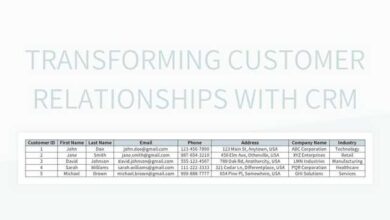
Starting with an exploration of HubSpot CRM, this overview dives into the key features and benefits of this powerful tool for managing customer relationships. From setting up accounts to sales automation and marketing integration, HubSpot CRM offers a comprehensive solution for businesses of all sizes.
With a focus on customization options, reporting capabilities, and mobile accessibility, this software provides a user-friendly experience that enhances customer support and streamlines operations. Discover how HubSpot CRM can revolutionize the way you engage with your contacts and drive business growth.




Overview of HubSpot CRM
HubSpot CRM is a powerful customer relationship management tool that helps businesses organize, track, and nurture their customer relationships effectively. It offers a range of key features that streamline sales processes and improve customer interactions.
Key Features of HubSpot CRM
- Centralized Database: HubSpot CRM provides a centralized database where businesses can store all customer information, interactions, and communication history in one place.
- Contact Management: Users can easily manage and segment contacts based on various criteria, allowing for personalized communication and targeted marketing efforts.
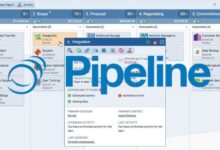
- Sales Pipeline Management: The CRM offers a visual sales pipeline that helps users track deals, prioritize tasks, and forecast revenue accurately.
- Email Tracking: HubSpot CRM allows users to track email opens, clicks, and engagement metrics, providing valuable insights into customer behavior.
How HubSpot CRM Helps Businesses Manage Customer Relationships
HubSpot CRM empowers businesses to build stronger relationships with their customers by providing tools for efficient communication, personalized interactions, and data-driven decision-making. By centralizing customer information and automating repetitive tasks, businesses can focus on delivering exceptional customer experiences and driving growth.
Examples of Industries Benefiting from HubSpot CRM
- Technology: Technology companies can use HubSpot CRM to manage leads, track sales opportunities, and analyze customer data to improve marketing strategies.
- Retail: Retail businesses can leverage HubSpot CRM to create targeted marketing campaigns, track customer interactions, and provide personalized shopping experiences.
- Real Estate: Real estate agents can use HubSpot CRM to manage client relationships, track property listings, and automate follow-up communication for more effective sales processes.
Setting up HubSpot CRM
To begin using HubSpot CRM, follow these steps to create your account and import contacts.
Creating a HubSpot CRM Account
- Visit the HubSpot website and click on the “Get HubSpot CRM for free” button.
- Fill out the required information, including your name, email address, company name, and password.
- Agree to the terms of service and privacy policy, then click on “Get Started.”
- Follow the on-screen instructions to complete the account setup process.
Importing Contacts into HubSpot CRM
- Log in to your HubSpot CRM account.
- Go to the “Contacts” tab and click on “Import” in the upper right corner.
- Choose the source from which you want to import contacts, such as a CSV file, Gmail, or Outlook.
- Map the fields from your source to the corresponding fields in HubSpot CRM, then click “Next.”
- Review the import summary to ensure accuracy, then click “Import.”
Customization Options in HubSpot CRM
HubSpot CRM allows users to customize their account to suit their specific needs and preferences.
- Customize contact properties, deal stages, and pipeline settings to align with your sales process.
- Create custom fields to capture unique information about your contacts and deals.
- Personalize email templates, sequences, and workflows to automate communication with your contacts.
- Utilize reporting and dashboard customization to track and analyze relevant metrics for your business.
Managing Contacts in HubSpot CRM
Managing contacts in HubSpot CRM is essential for building and maintaining relationships with your customers. By adding and organizing contacts effectively, tracking interactions, and segmenting contacts for targeted marketing, you can optimize your CRM strategy for success.
Adding and Organizing Contacts
Adding contacts in HubSpot CRM is a straightforward process. You can manually enter contact details or import contacts from external sources like spreadsheets. Once added, you can organize contacts into lists or create custom properties to categorize them based on specific criteria.
Tracking Interactions with Contacts
Tracking interactions with contacts allows you to monitor engagement and follow-up effectively. In HubSpot CRM, you can log emails, calls, meetings, and other interactions with contacts directly within their profiles. This helps you keep a record of communication and track the progress of each relationship.
Segmenting Contacts for Targeted Marketing
Segmenting contacts in HubSpot CRM enables you to personalize your marketing efforts and tailor messages to specific audience segments. You can create segments based on demographics, behavior, or engagement level to send targeted email campaigns, content, or offers. By segmenting contacts, you can increase engagement and conversion rates.
Sales Automation in HubSpot CRM
Automating sales processes can significantly improve efficiency and productivity for sales teams. HubSpot CRM offers several automation features to streamline tasks and help sales reps focus on closing deals rather than getting stuck in administrative work.
Creating and Tracking Deals in HubSpot CRM
- HubSpot CRM allows users to create deals easily by entering relevant deal information such as deal name, amount, expected close date, and deal stage.
- Sales reps can track the progress of deals in real-time, update deal stages, add notes, schedule follow-up tasks, and assign deals to team members.
- Users can set up automated deal notifications and reminders to stay on top of important deal activities and deadlines.
Benefits of Using Automation in the Sales Process
- Increased Efficiency: Automation reduces manual tasks, saving time for sales reps to focus on engaging with leads and closing deals.
- Improved Accuracy: Automation helps minimize errors in data entry and ensures that important information is consistently updated and shared across the team.
- Enhanced Sales Performance: With automation, sales teams can prioritize leads effectively, nurture relationships efficiently, and track deals more effectively, leading to improved sales performance and higher conversion rates.
Marketing Integration with HubSpot CRM
In today’s digital age, integrating marketing efforts with CRM data has become essential for businesses looking to streamline their processes and drive more effective campaigns. HubSpot CRM offers seamless integration with various marketing tools, allowing for a cohesive approach to customer engagement and lead generation.
Benefits of Aligning Marketing Efforts with CRM Data
- Improved Targeting: By leveraging CRM data, marketers can create more targeted and personalized campaigns based on customer behavior and preferences.
- Enhanced Lead Nurturing: Integration with CRM data enables marketers to track and analyze customer interactions, allowing for more effective lead nurturing and conversion.
- Better ROI: Aligning marketing efforts with CRM data can lead to increased ROI by optimizing campaigns, improving customer engagement, and driving more qualified leads.
- Streamlined Processes: Integrating marketing tools with CRM simplifies data sharing and communication between sales and marketing teams, leading to more efficient workflows and better collaboration.
Strategies for Using HubSpot CRM to Improve Marketing ROI
- Lead Scoring and Segmentation: Utilize HubSpot CRM’s lead scoring feature to prioritize leads based on their behavior and engagement, allowing for targeted marketing campaigns to drive conversions.
- Automated Workflows: Set up automated workflows in HubSpot CRM to streamline marketing processes, from lead nurturing to customer retention, improving efficiency and effectiveness.
- Personalized Campaigns: Leverage CRM data to create personalized and targeted marketing campaigns, increasing engagement and driving customer loyalty.
- Closed-loop Reporting: Use HubSpot CRM’s reporting tools to track the success of marketing campaigns, analyze ROI, and make data-driven decisions for future strategies.
Reporting and Analytics in HubSpot CRM
Reporting and analytics are crucial components of any CRM system, providing valuable insights and data-driven decisions for businesses. HubSpot CRM offers robust reporting capabilities and analytics tools to help businesses track performance, measure success, and optimize strategies.
Reporting Capabilities of HubSpot CRM
HubSpot CRM provides a variety of pre-built reports that allow users to track sales activities, monitor pipeline performance, and analyze marketing efforts. Users can easily access reports on deals closed, sales team productivity, email engagement, and more. These reports offer valuable insights into the effectiveness of sales and marketing campaigns, helping businesses make informed decisions to drive growth and revenue.
Generating Custom Reports in HubSpot CRM
In addition to pre-built reports, HubSpot CRM allows users to create custom reports tailored to their specific needs and goals. By selecting the desired metrics, filters, and visualization options, users can generate detailed reports that provide a deeper understanding of their sales and marketing performance. Custom reports can be saved and shared with team members, enabling collaboration and alignment across departments.
Analytics in HubSpot CRM for Data-Driven Decisions
Analytics in HubSpot CRM empower businesses to make data-driven decisions by providing real-time insights into key metrics and performance indicators. By tracking and analyzing data on customer interactions, lead generation, and conversion rates, businesses can identify trends, opportunities, and areas for improvement. With actionable analytics, businesses can optimize their strategies, personalize customer interactions, and drive revenue growth effectively.
Customer Support Features in HubSpot CRM
HubSpot CRM offers a range of customer support tools to help businesses effectively manage customer tickets and inquiries, providing a seamless experience for both customers and support teams.
Managing Customer Tickets and Inquiries
- HubSpot CRM allows support teams to create and organize customer tickets, track their status, assign them to team members, and set priorities for resolution.
- Through the ticketing system, support agents can communicate with customers, collaborate internally, and provide timely updates on the ticket progress.
- Customer inquiries can be centralized within the CRM, ensuring that all interactions and information are easily accessible to provide personalized and efficient support.
Benefits of Using HubSpot CRM for Customer Support Teams
- Improved efficiency: The ticketing system streamlines support processes, reducing response times and resolving customer issues faster.
- Enhanced collaboration: Support teams can work together seamlessly within the CRM, sharing information and insights to provide comprehensive support.
- Personalized customer service: By centralizing customer information and interactions, support agents can deliver tailored solutions and build stronger relationships with customers.
- Insightful reporting: HubSpot CRM provides analytics on support performance, ticket resolution times, and customer satisfaction metrics, enabling teams to optimize their support strategies.
Mobile Accessibility of HubSpot CRM
Mobile accessibility of HubSpot CRM allows users to stay connected and manage their contacts, sales, and marketing activities on-the-go. Whether you are traveling, attending meetings, or working remotely, you can access HubSpot CRM from your mobile device to stay productive and efficient.
Features of HubSpot CRM Mobile Version
- Access to contact information, deals, and tasks
- Real-time notifications for important updates
- Ability to log calls and emails directly from the app
- Viewing and updating deal stages and progress
- Syncing data across devices for seamless experience
Advantages of Using HubSpot CRM on-the-go
- Increased productivity by managing tasks and updates anytime, anywhere
- Quick access to critical information during meetings or client interactions
- Enhanced collaboration among team members with real-time updates and notifications
- Improved efficiency in tracking and progressing deals while out of the office
- Flexibility to respond to leads and customer inquiries promptly
Integrations and Customization Options for HubSpot CRM
HubSpot CRM offers a wide range of integrations and customization options to help businesses tailor their CRM system to fit their specific needs and workflows.
Popular Integrations with HubSpot CRM and Their Functionalities
- Mailchimp: Integrating Mailchimp with HubSpot CRM allows for seamless email marketing campaigns and automation, ensuring that contacts are effectively nurtured through the sales funnel.
- Salesforce: By integrating Salesforce with HubSpot CRM, businesses can sync data between the two platforms, providing a comprehensive view of customer interactions and sales processes.
- Zapier: Zapier enables users to connect HubSpot CRM with over 2,000 other apps, automating workflows and streamlining processes across different platforms.
Customizing HubSpot CRM to Suit Specific Needs
Businesses can customize HubSpot CRM by creating custom properties, workflows, and templates to align with their unique requirements. This flexibility allows organizations to capture and analyze data in a way that is most relevant to their operations.
Examples of Unique Leveraging of HubSpot CRM Integrations
- Integration with SurveyMonkey: Companies can integrate SurveyMonkey with HubSpot CRM to gather customer feedback and insights, which can then be used to tailor marketing campaigns and improve customer satisfaction.
- Integration with Shopify: By integrating Shopify with HubSpot CRM, businesses can track customer interactions across multiple touchpoints, providing a unified view of the customer journey and enabling personalized communication.
- Integration with Slack: Integrating Slack with HubSpot CRM facilitates real-time communication among sales and marketing teams, ensuring that valuable insights and updates are shared promptly for enhanced collaboration.
Conclusion
In conclusion, HubSpot CRM stands out as a versatile and intuitive platform that empowers businesses to build stronger relationships, drive sales, and optimize marketing strategies. With its array of features and seamless integrations, HubSpot CRM is a game-changer for companies looking to elevate their customer management processes.

Hi, I’m Lauren. As a digital enthusiast and storyteller, I love breaking down complex ideas into easy-to-read articles. My goal is to provide readers with fresh perspectives and helpful solutions through every piece I write.